

The Markets Vote Early
Waiting until the election is over can feel like the sensible thing to do. There will be a result, and investors can then decide what comes next. Yet markets rarely wait for that clarity. By the time the votes are counted, share prices may already reflect much of the outcome investors were waiting to see.
That is worth remembering following the US midterm elections on 3 November 2026. History offers an intriguing reassurance: the S&P 500 was higher twelve months after every midterm from 1950 through 2022, by about 15% on average. The more revealing story is what happened on the way there.
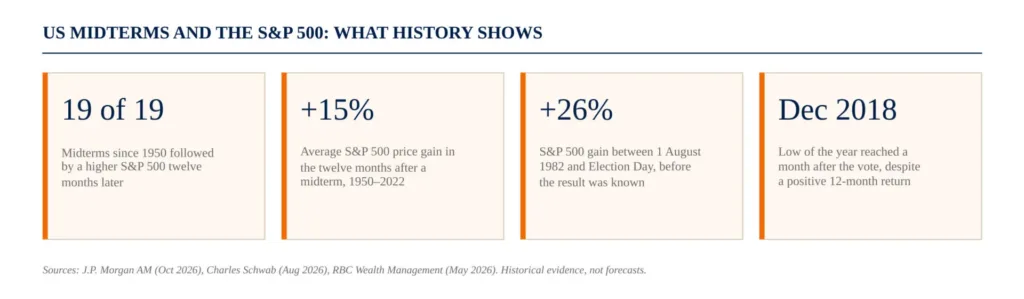
The recovery often begins before the vote
Midterm years have typically been unsettled for shareholders: daily price swings were larger than in other years. But an unsettled market need not be a falling one. The average recovery began roughly 22 trading days before Election Day, and October delivered an average gain of 3.0% in midterm years since 1950. Anyone waiting for the result could miss part of that recovery.
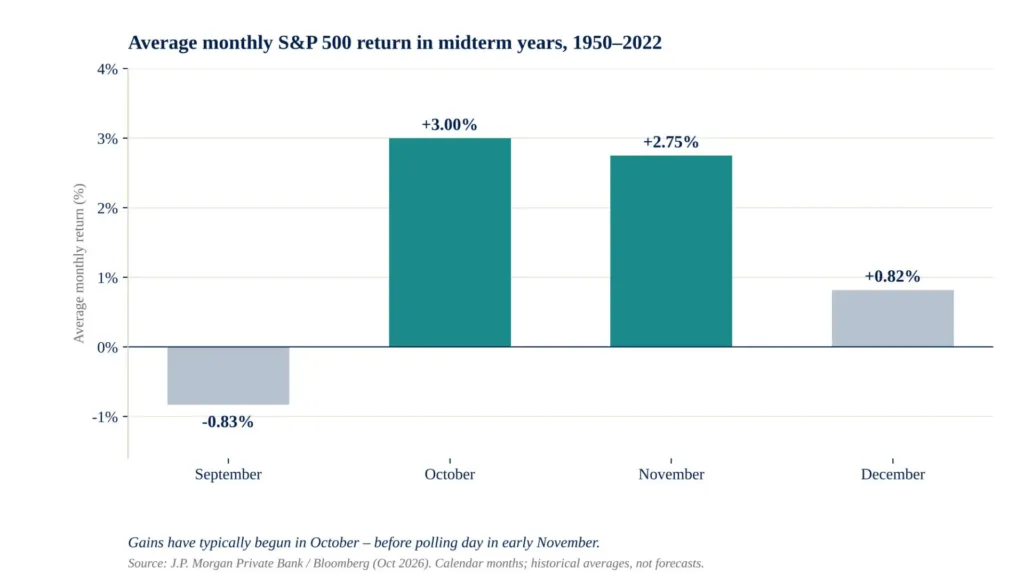
The years 1982 and 2018 show how different the path to a positive return can be. In 1982, the rally was already under way before the vote, carried by falling interest rates. In 2018, stocks kept falling after the election to a December low – knowing the result had not resolved the larger concern about the economy. The same positive record, two opposite timing risks.
The 2026 result, Democratic majorities in both chambers, is now a fresh test of that pattern. The initial reaction was unsettled, but the question for investors is not who won, but which changes are already reflected in share prices.
Conclusion
History gives investors good reason to resist the urge to retreat until politics feels calmer. It gives much less reason to buy simply because a midterm has passed. Elections can change policy expectations overnight, but they do not settle earnings, interest rates or valuations – and those are what long-term returns depend on.
ADVERTISEMENT
This document has been prepared solely for information and advertising purposes and does not constitute a solicitation offer or recommendation to buy or sell any investment product or to engage in any other transactions.