

Growth is Not Quality
Growth is an appealing part of any investment story. More customers, new products and rising sales suggest that a business is becoming more successful. Yet expansion also makes demands: orders must be fulfilled, capacity built and products developed before the benefits arrive.
For shareholders, the outcome depends on whether those demands are met by the cash the company earns – and whether the investment ultimately earns an adequate return. A larger company does not necessarily leave each shareholder better off.
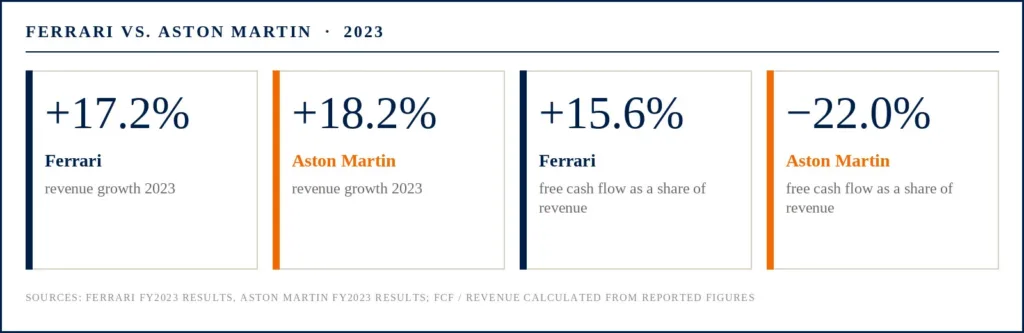
Same growth, different cash
Ferrari and Aston Martin make the distinction tangible. In 2023, both increased revenue by roughly 18%. Following the cash reveals how differently that growth was funded. Ferrari invested €869m and still generated €932m of industrial free cash flow. Aston Martin’s operating cash of £146m could not cover £397m of investment and £109m of net interest – a £360m free cash outflow.
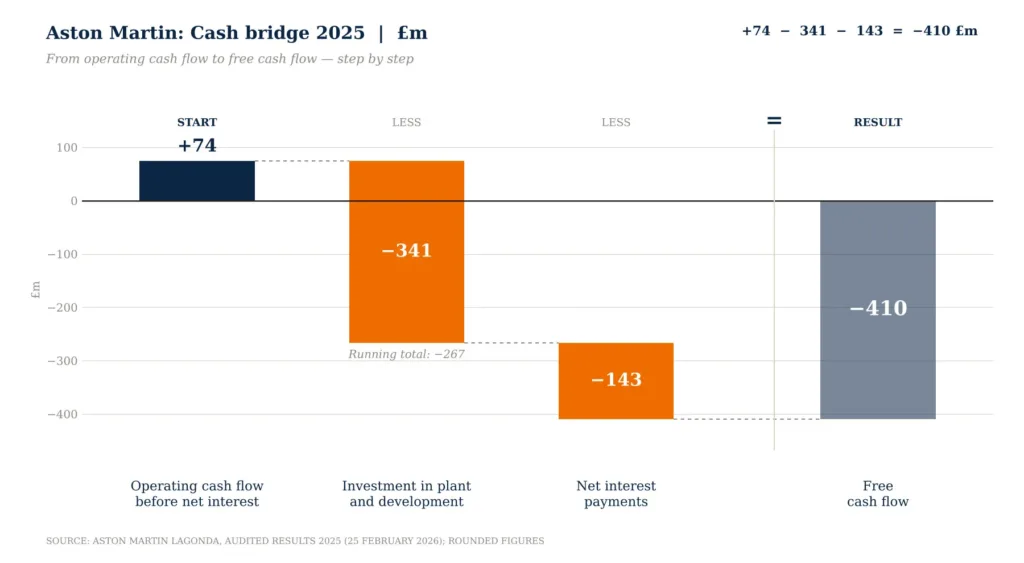
Spending ahead of a product launch can be reasonable, but later sales must generate enough cash to justify it. In 2025, Aston Martin’s revenue fell 21%, free cash outflow reached £410m and net debt stood at £1.38b. Ferrari generated more than €1.5b of industrial free cash flow in the same year.
Conclusion
Negative free cash flow is not necessarily poor Quality. What matters is the full investment cycle: how much cash must be committed before customers pay, what return that capital should earn, and whether the business can keep investing if demand falls short. The objective is not to minimise investment, but to finance productive growth without surrendering financial flexibility or diluting value per share.
ADVERTISEMENT
This document has been prepared solely for information and advertising purposes and does not constitute a solicitation offer or recommendation to buy or sell any investment product or to engage in any other transactions.