

The CEO Test
Jensen Huang helped build NVIDIA into a defining company of the AI era. His departure as CEO on 11 November 2026 turns an abstract investment question into a live test: how much of a company’s success depends on one exceptional leader, and how much survives in the organisation that leader built?
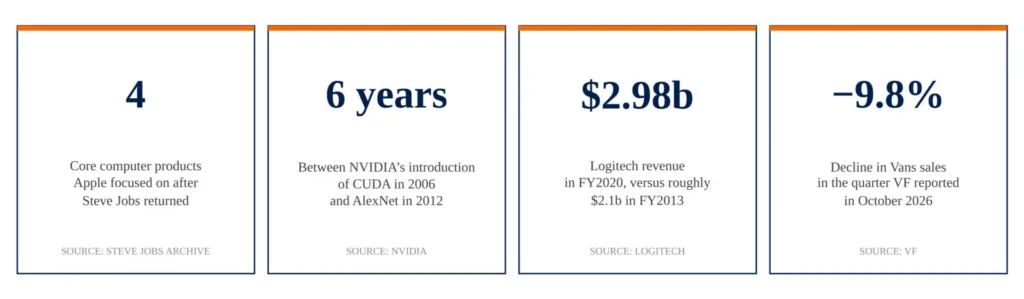
Management quality matters because competitive advantages need both protection and renewal. Steve Jobs narrowed Apple’s computer range to four core products. NVIDIA introduced CUDA in 2006, six years before AlexNet showed what its chips could do for AI. Both committed talent and capital to opportunities whose value was not yet obvious in the accounts.
Turning vision into investment
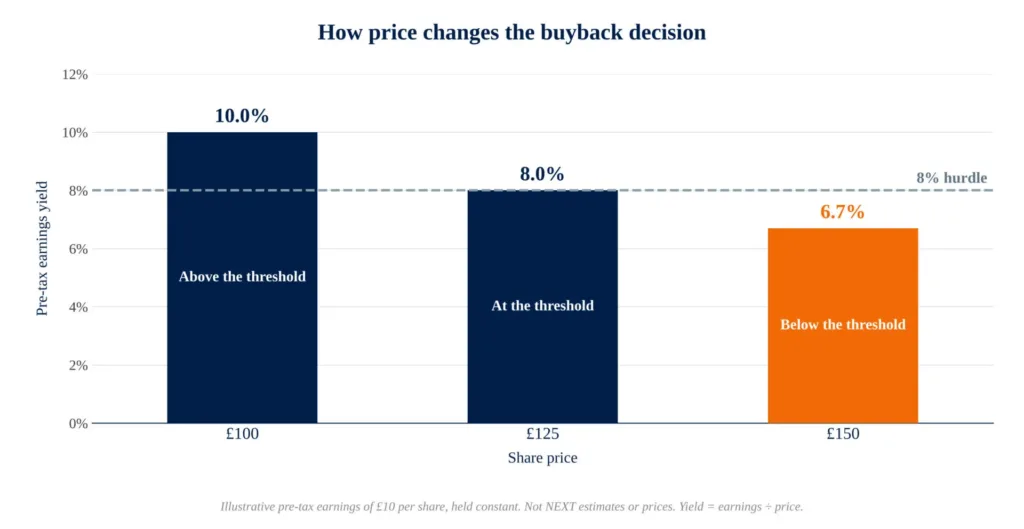
Such decisions are capital allocation in practice: they determine where money and talent go, and which opportunities are left behind. The British retailer NEXT shows what discipline looks like. It buys back its own shares only when expected pre-tax profit, relative to market value, reaches at least 8%. The price paid becomes an explicit condition of the decision.
Past success needs context too. Bracken Darrell strengthened Logitech before the pandemic demand surge. At VF, margin and debt have improved under his leadership, but Vans sales are still declining. Leadership deserves credit for what it changes, while the starting business, industry conditions and time also shape the result.
Conclusion
Great CEOs create value. Exceptional leadership builds an organisation capable of creating value long after the CEO has gone. For investors, it is important to follow decisions and their consequences over several years.
ADVERTISEMENT
This document has been prepared solely for information and advertising purposes and does not constitute a solicitation offer or recommendation to buy or sell any investment product or to engage in any other transactions.