
The Hidden Value of Pricing Power
A price increase puts a customer relationship to the test. The customer can pay more, buy less or look elsewhere. A business with pricing power can raise its prices while preserving enough demand to strengthen its economics over time.
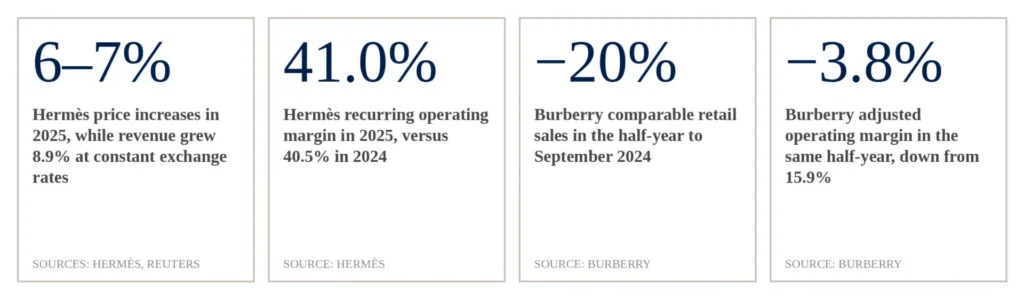
Luxury shows both sides. Hermès increased prices by around 6–7% in 2025 while revenue kept growing and its recurring operating margin reached 41.0%. Burberry learned the opposite lesson: after pushing prices beyond what customers saw in the brand, comparable retail sales fell 20% and the adjusted operating margin turned negative.
Why a small price rise matters so much
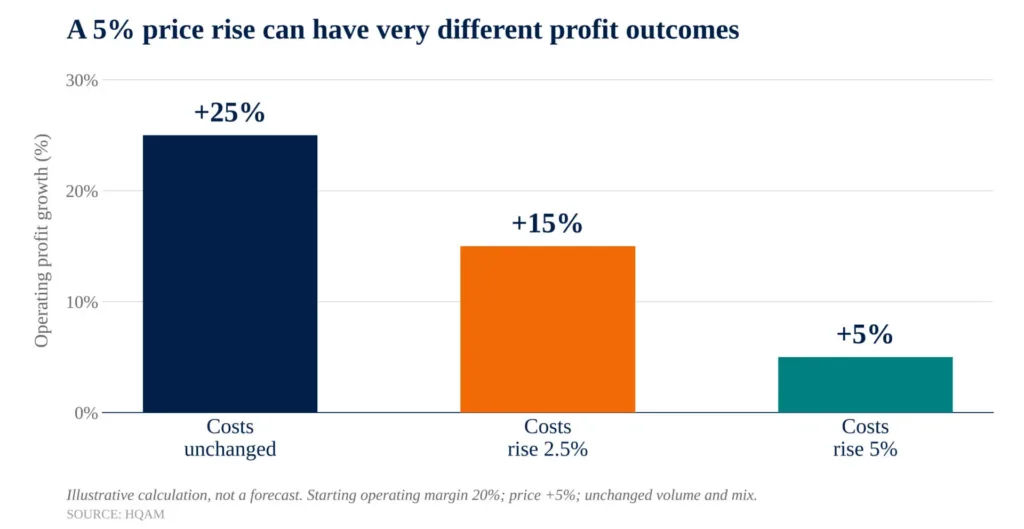
Consider a company with an operating margin of 20%. If it raises prices by 5%, sells the same quantity and keeps costs unchanged, operating profit rises by 25%. If all operating costs rise by 5% as well, profit grows by only 5%. A price increase must therefore be judged alongside costs, volumes and the investment needed to keep the product attractive.
Even strong brands face limits. In 2026, luxury shoppers are becoming more selective. Hermès’ most coveted handbags continued to sell strongly in the third quarter, while sales of clothing, accessories and watches declined. Customers still have to feel that what they receive is worth what they pay, and that judgement is renewed with every purchase.
Conclusion
The hidden value of pricing power may lie in the price increase a company has not yet taken. A business that leaves customers with a good reason to stay preserves room to respond when costs rise. For investors, the question is whether a company still has that room, or has already asked as much of its customers as they are willing to pay.
ADVERTISEMENT
This document has been prepared solely for information and advertising purposes and does not constitute a solicitation offer or recommendation to buy or sell any investment product or to engage in any other transactions.